Configuring Point-in-time restore in Windows

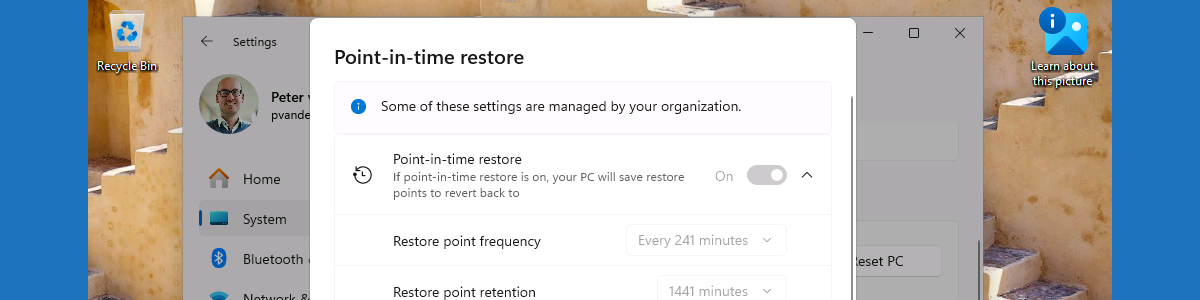
This week is a follow-up on this post of earlier this year about getting started with point-in-time restore in Windows. At that moment, the early release of Point-in-time-restore became available and showed the concept in the Windows. Now that functionality is further developed in to a general available feature that also includes management capabilities via Microsoft Intune. Point-in-time-restore fits perfectly in the storyline of the many new (and still coming) features related to the backup, restore, and recovery of Windows. That storyline goes from Quick Machine Recovery, which is focused on recovering Windows devices when encountering critical errors that prevent the device from booting, to Windows settings backup and restore (previously known as Windows Backup for Organizations), which is focused on making it easier to switch …

Read more

Managing Apple Intelligence on iOS and iPadOS devices

This week is all about managing Apple Intelligence on iOS and iPadOS devices. Apple Intelligence is the personal AI that is built directly into iOS, iPadOS and MacOS. With that, Apple provides users with generative AI models that can directly integrate with personal data to help with writing content, creating images, organizing notifications, and more, while keeping the data private by processing it locally or by using Private Cloud Compute. On top of that, it nowadays also provides the ability to integrate with ChatGPT. And that is where it might become discussion worthy for most organizations. In general, especially in Europe, organizations nowadays want control over their data and the location of their data. That might already be a discussion for the Private Cloud Compute, …

Read more

Collecting Windows registry data

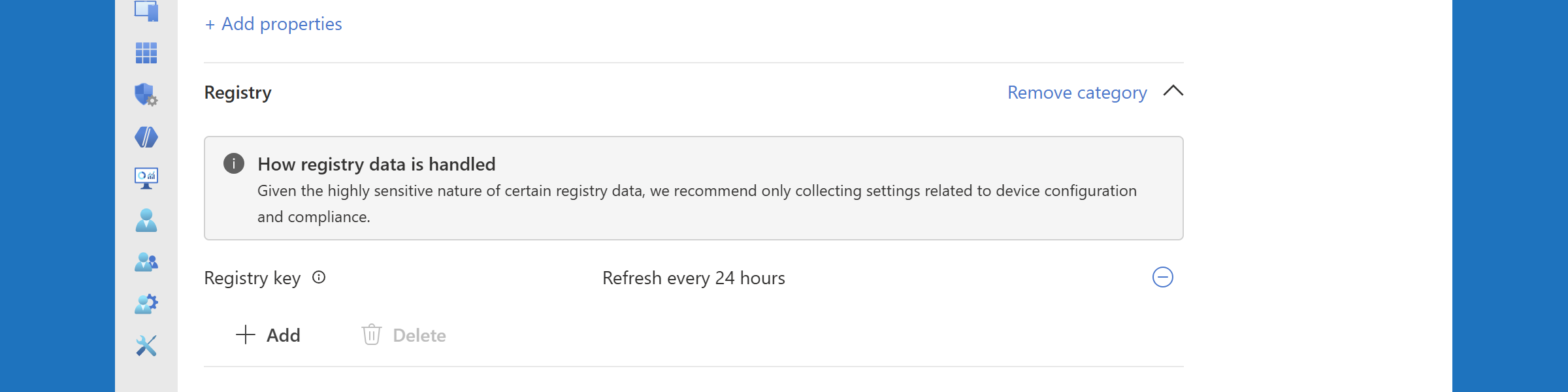
This week is all about the recently introduced capability to collect Windows registry data (or in other words, the ability to perform registry inventory). A lot has been written about that capability, but it is such an important enhancement that it deserves a place on this blog as well. Until this moment, IT administrators often used scripting solutions to collect specific Windows registry data. With the introduction of the collection of Windows registry data, the need for such solutions should decline. There will, however, always be scenarios in which it is better to still hold on to those scripting solutions. The capability to collect Windows registry data is part of the earlier introduced device inventory, using the Properties Catalog. That means that the collected information …

Read more

Customizing the pinned folders in Start layout

This week is all about customizing the pinned folders in the Start layout, and is a follow-up on this post about customizing the power options in Start layout. Again, it is important to start with that the fact that something is technically possible, does not mean that it should actually be done. In most cases, it should be up to the user to configure in the Start layout whatever they need to be productive. There are, however, cases in which an IT administrator might need to take a bit more control. That can be useful on shared devices, such as kiosk devices and Shared PCs. This post will be another part in the series to go through the different sections of the Start layout, this …

Read more

Customizing the power options in Start layout

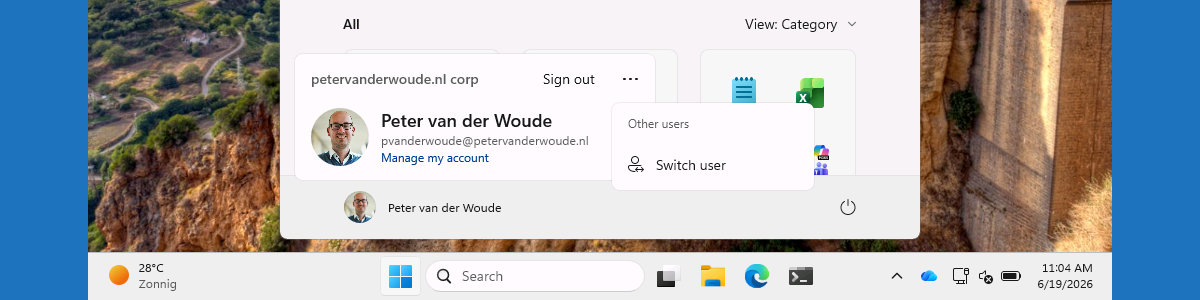
This week is all about customizing the power options in the Start layout, and is the first follow-up on this post about customizing the account settings in Start layout. Again, it is important to start with that the fact that something is technically possible, does not mean that it should actually be done. In most cases, it should be up to the user to configure in the Start layout whatever they need to be productive. There are, however, cases in which an IT administrator might need to take a bit more control. That can be useful on shared devices, such as kiosk devices and Shared PCs. This post will be another part in the series to go through the different sections of the Start layout, …

Read more

Getting started with Android Enterprise personally owned devices with work profile

This week is all about the move of Android personally-owned devices to the Android Management API (also known as AMAPI). The Android Management API is the API that is already being used for all the different corporate-owned device flavors that might exist already within the environment. That API is the recommended path for Android device management, by Google. With that API, Google also provides its own companion app Android Device Policy. That means that it is no longer required to create and maintain a custom device policy controller (DPC) to talk to an API. Together, that should help with faster availability of new features and consistency between the all different Android Enterprise management flavors, as all of those flavors are now managed via the same …

Read more

Customizing the account settings in Start layout

This week is all about customizing the account settings in the Start layout. Customizing the Start menu layout has been the subject of discussion multiple times already on this blog. There is, however, a lot more that can be done. Of course, that something is possible, does not mean that it should be done. In most cases, it should be up to the user to configure in the Start layout whatever they need to be productive. There are, however, cases in which an IT administrator might need to take a bit more control. That can be useful on shared devices, such as kiosk devices and Shared PCs. This post will be part of a series to go through the different sections of the Start layout, …

Read more

Turning off account notifications in Start and multi-app kiosk mode

This week is also all about another relatively small, but nowadays essential, configuration to further enhance the Start layout experience. Especially when using multi-app kiosk mode with local accounts. That configuration is to turn off account notifications for Microsoft accounts (MSA) and local users in the user tile of Start. Turning off account notifications is especially relevant when using multi-app kiosk mode with local accounts, as that includes getting users to sign with a Microsoft account to backup their device, to manage cloud storage quotas, and more. Those account notifications might trigger users to perform actions that do not belong on managed devices and that are not available. Especially not on kiosk devices. It is actually pretty strange that those account notifications show on managed …

Read more

Hiding the recommended section from the Start layout and multi-app kiosk mode

This week is all about another relatively small, but essential, configuration to further enhance the Start layout experience. Especially when using multi-app kiosk mode. That configuration is to hide the recommended section from the Start layout. Hiding that section is especially relevant when using a multi-app kiosk mode, as that includes a link to the Settings app when there are no recommendations. Even though that might sound pretty small, it does take away another item that a user could potentially click on and hitting an unnecessary blockage. In those cases lesser is better. That means that there are definitely scenarios in which it can be really useful to prevent the Start layout from displaying recommended applications and files. This post will provide a closer look …

Read more

Using Microsoft Edge secondary tiles in the Start layout and multi-app kiosk mode

This week is all about Microsoft Edge secondary tiles. Microsoft Edge secondary tiles are website shortcuts that are pinned to the Start layout. Those pins provide quick access to specific websites directly from the Start layout. Basically, those pins function similar to any other app shortcuts that are pinned to the Start layout. Any user can create website shortcuts in the Start layout by simply navigating in Microsoft Edge to Settings > More tools > Pin to Start. There can scenarios in which it might be useful to already pre-pin specific websites for the user. The most common scenario is a multi-app kiosk mode configuration in which specific websites must be pinned for the users of those devices. That’s where Microsoft Edge secondary tiles become …

Read more