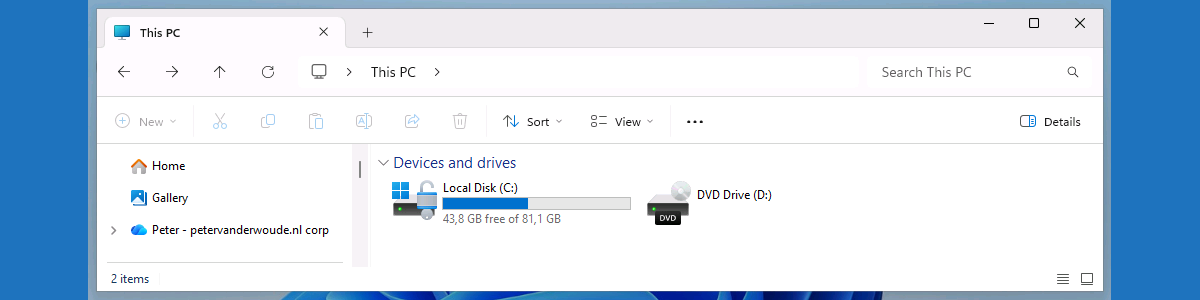
Applying a customizable Taskbar layout

This week is all about customizing the Taskbar layout on Windows 11. More specific, customizing the pinned applications on the Taskbar. That on itself is nothing new, as, just like customizing the Start menu layout, customizing the Taskbar layout has been possible since the early days of Windows 11. The main configurations related to customizing the Taskbar layout are described in this post. That also means that the ideas around customizing the Taskbar layout have not changed. Customizing the Taskbar layout enables organizations to provide users with a standard set of options and pinned applications in the Taskbar. To create a standardized layout for Windows 11, the IT administrator should use a XML-file that contains the configuration of the pinned applications in the Taskbar. What makes …
Read more

Elevating in user context using Endpoint Privilege Management

This week is all about the new feature that was recently introduced in Endpoint Privilege Management (EPM), and that feature is the ability to elevate as the current user. Elevating files, or processes, as the current user enables it to run under the signed-in user account. That enables organizations to address one of the last gaps in the product, which is being able to access personal files while running elevated files, or processes. That means that it is actually running in the user context for that specific action, instead of using the virtual account that is normally used in EPM. It maintains the same user identity. That provides the user with access to the user profile, environment variables, and personalized settings, but also keeps audit …

Read more

Managing account management on Shared PCs

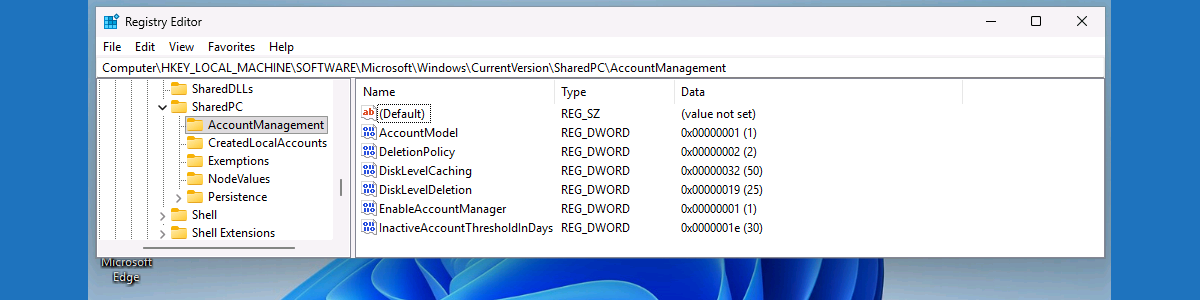
This week is all about a closer look at Shared PC Mode on Windows 11. More specifically, this week is all about managing account management capabilities in Shared PC Mode. Account management in Shared PC Mode is about managing the accounts on the device, determining the users that can sign on to the device, and configuring what automatically starts. This post will mainly focus on the first, managing the accounts on the device. Especially on a device that is being shared between many users, it is important to make sure that those accounts are managed properly to prevent the disk from filling up completely. Luckily, within the capabilities of Shared PC Mode there are options for managing those accounts, including cleaning up accounts when needed. …

Read more

Easier configuring Shared PC mode with OneDrive sync enabled

This week is all about easier enabling Shared PC mode with OneDrive sync. That was already possible for many years, as described here, but the configuration became a lot easier. Starting with Windows 11 version 22H2 a setting was introduced that enables IT administrators to enable Shared PC mode with OneDrive sync. For a long time that setting was not available for easy configuration and would require custom configurations to be enabled. That on its turn could create duplicate and conflicting configurations, often caused by multiple policies enabling Shared PC mode. As everything can now be configured via a single policy, those types of issues can be prevented. An IT administrator can now use a single policy to manage everything around Shared PC, even when OneDrive …

Read more